Tomorrowing
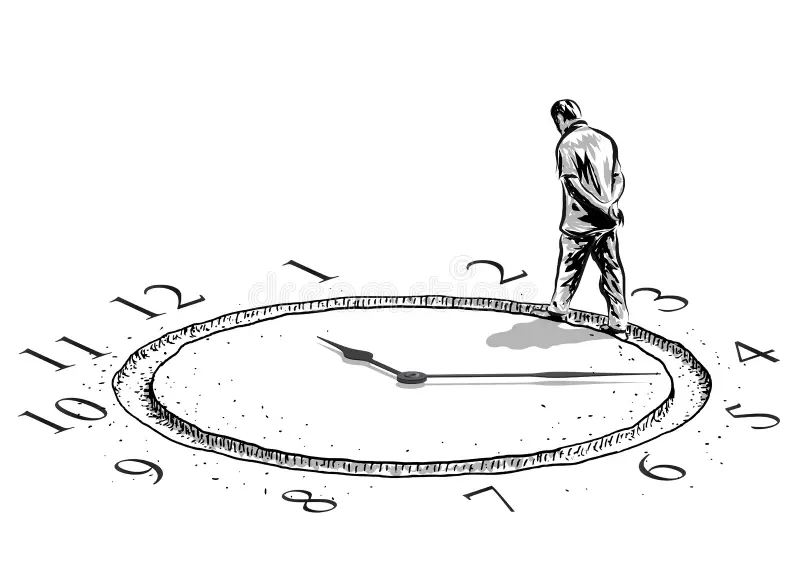
If you're reading this, there's a one in four chance you're doing it to avoid something else that you should be doing.1 In other words, statistics show that 25% of adults are chronic procrastinators on some level. How did it get this far? 2
Levels of procrastination are caused by our choices in the world. In the Bhagavad Gita, Krishna describes how reality is covered with three lenses of perception which influence our activities. Like the three primary colors create all of the varieties of hues we observe in the world, the three gunas or qualities of nature permit a particular way of viewing and interacting with reality. The word guna literally means a thread, and it is semantically understood as "quality" because the gunas weave together to create material reality.
The gunas are sattva, rajas, and tamas, or being, excitement, and inertia. All are necessary to carry out different natural functions of the universe, but pure sattva is what human beings are meant to strive for. This is due to the nature of sattva, which is associated with peace, knowledge, self-awareness, and discipline, which are all necessary things for happiness in this world.
Krishna says in the third chapter of the Gita that the effects of a predominance of the lower modes are what causes procrastination. When one is overwhelmed by excitement, they are inclined to act in ways that cause immediate pleasure at the expense of their best interests, and the mode of inertia makes people act against their best interest in activities that provide very poor quality kinds of pleasure. Sound familiar? The mode of being impels people to act in their best interest even if it is uncomfortable or unpleasant in the moment. Therefore, to overcome procrastination, or any other self-deprecating habit, Krishna encourages that we rise to sattva.
The Gita doesn't only provide lofty destinations without detailed directions. Much of the text is dedicated to describing how to navigate and overcome the influences of the lower modes in order to situate one in pure sattva. The Gita recommends that by cleaning an organizing one's workspace, head-space, and heart-space, the influence of the lower modes of nature and their symptoms like procrastination can be overcome.
The workspace is not only one's environment, but also their body. It means having the needs of the body met and working in an environment congenial to executing one's responsibilities. The head-space is more subtle, it's the mental and emotional world. Keeping the head-space clean means that one is emotionally stable, focused, and disciplined. The heart-space is the most important of all three, one's internal motivation, purpose, and identity. Maintaining their motivation and purpose, situated with a healthy self-image, human beings are capable of amazing things. Without such motivation and purpose, one might question why they should ever stop procrastinating to do the task at hand. By staying clean on these three levels, one is situated in sattva and can easily prioritize and execute the right things.
For chronic or acute procrastinators alike, these three keys of cleanliness are invaluable in unlocking more potential. But, they are just a temporary fix. Before you can solve a problem, you have to understand it, which is why Einstein said that he spends about 90% of his time understanding a problem before even attempting to solve it. The pull of the lower modes of nature should cause us to question ourselves. Why do we chase after immediate pleasures even if it harms us? What is the lack we feel we need to fill? Why are our lives uninspiring? Meditating on these questions is a matter of the heart-space, and their answers can be unlocked in such great texts like the Bhagavad Gita. Try to apply the wisdom of the Gita -- and stay curious to what else lies in this great gem of spiritual knowledge.